Sunday, January 8, 2017

THE CARACOL FESTIVAL IN HONOR OF THE SANTO Niño de TERNATE

Caracol/Karakol/Religious Procession Dance


The Caracol/Turumba Festival in honor of the Santo Niño de Ternate 


Updated: February 11, 2017


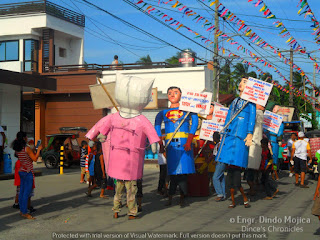
Karakol is a religious procession dance/street dancing ritual and a colorful form of thanksgiving is practiced and performed during fiestas. The tradition of Karakol (Turumba is the other name of Karakol in Ternate) starts with a procession to bring the image to Maragondon River. 

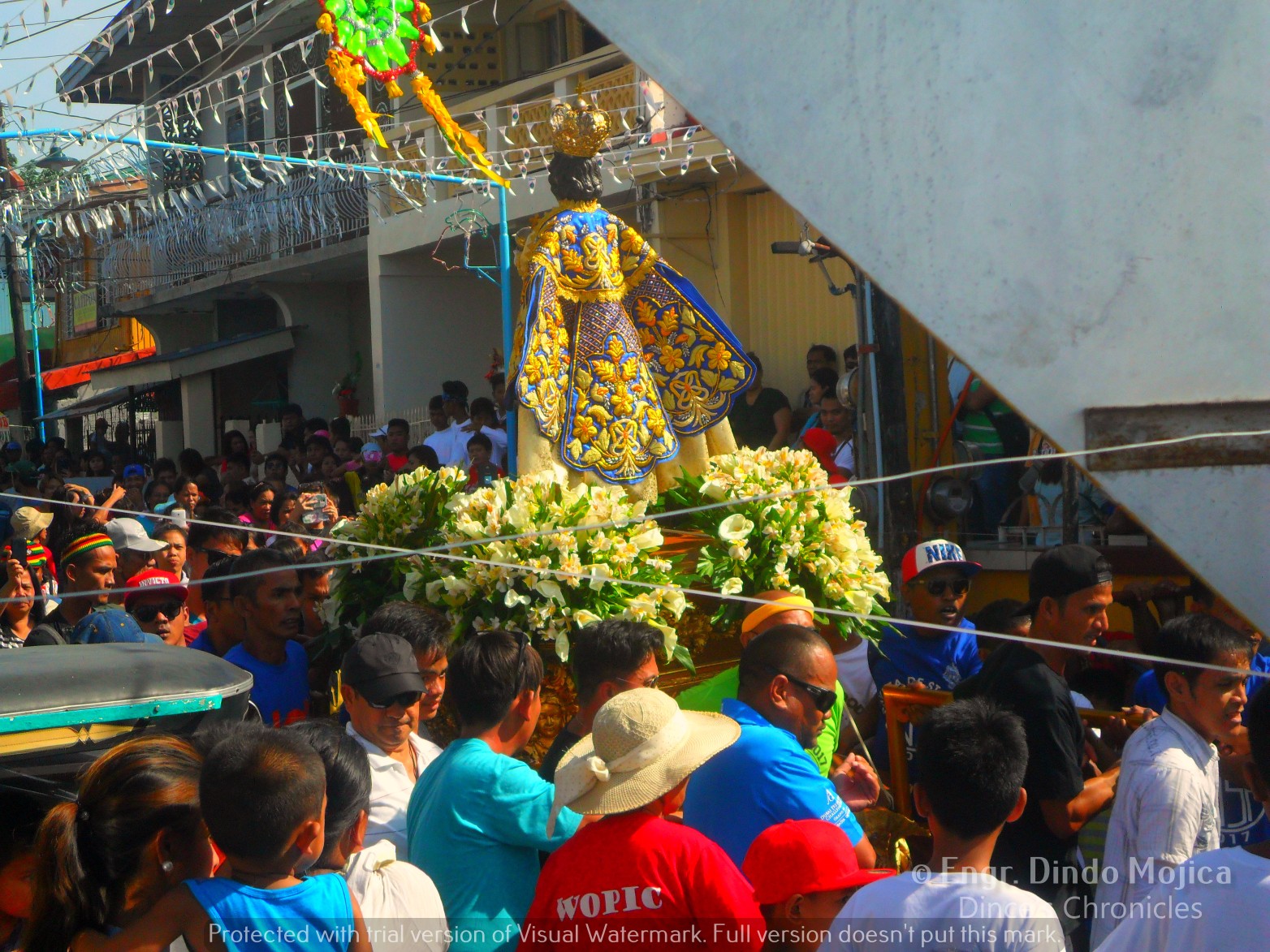
As the image of the Holy Child was brought out of the church, the karakol will start with a parade of performers (usually devotees, and locals) going to the town proper while dancing to effervescent music to show their sincere devotion to the Holy Child and will end at Maragondon River (in Barangay San Jose) for the fluvial procession.


RANRICH BEACH RESORT

Ranrich Beach Resort in Ternate, Cavite where the Fluvial Procession of the Santo Nino takes place. Fronting the Balot Island (Isla de Balut) at the boundary of Maragondon River and Manila Bay.


It features a fluvial procession performed by folk music played by a brass band or a recorded music (mobile sound system) and street dancing by children, teenagers, and women in fancy dress and hat. It is then placed aboard on a large banca (boat) with improvised alter decorated with flowers, balloons and paper flags, for the fluvial parade where thousands of devotees, young and old alike, dance to the rhythm of the brass band. 

Spectators at the riverbank also dance and pray while watching the activity. After the fluvial parade, the Santo Nino followed by the devotees and pilgrimage is brought to the streets for the actual Karakol around the town proper. Different groups joined the Karakol and merrily dance to the music of the brass band.


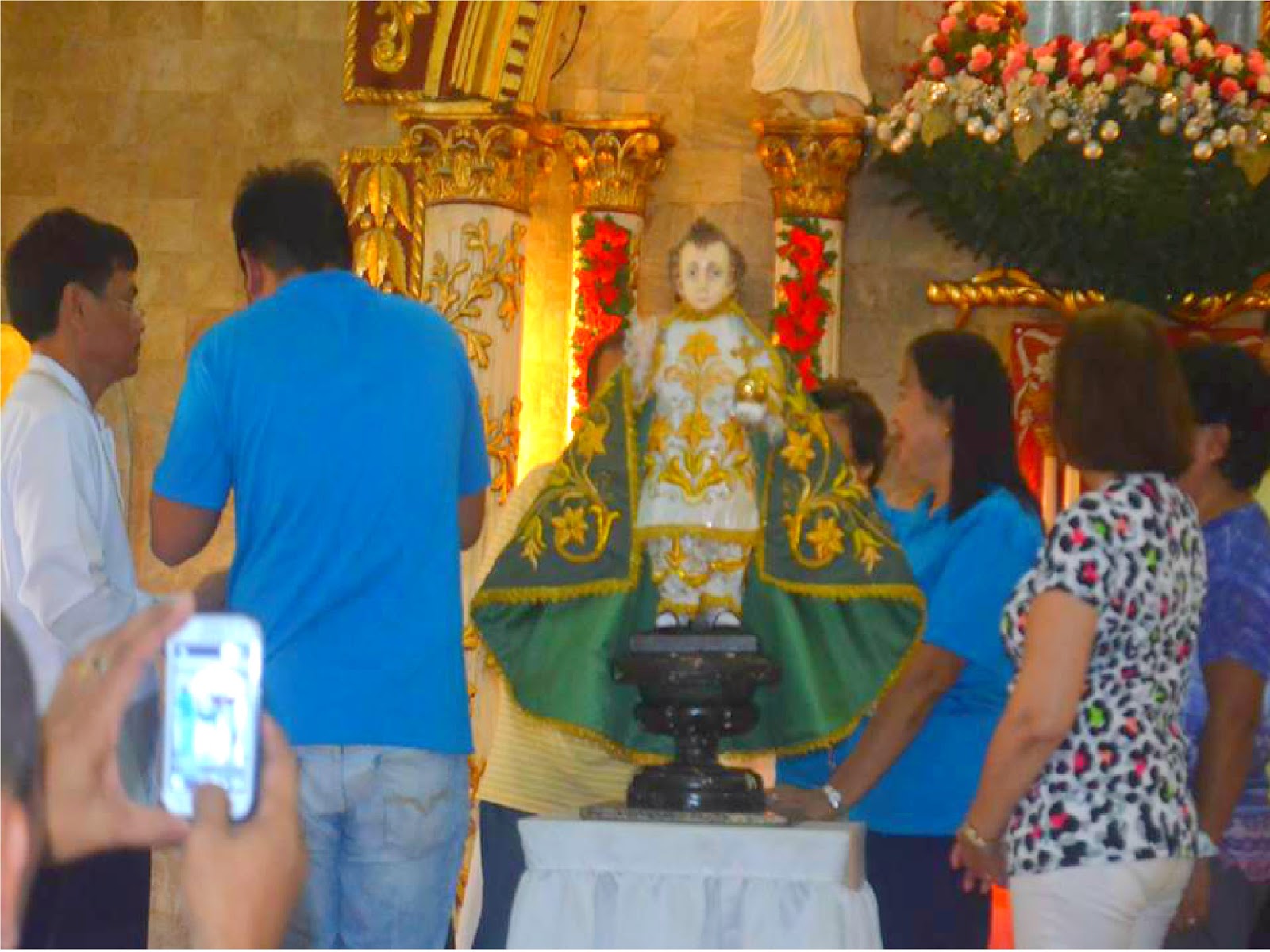
The image of the Santo Niño de Ternate is said to have been brought by Jesuit missionaries from the Group of Moluccas Islands in Indonesia (also known as Spice Islands in History books) to Cavite where Malay settlers, including the Sepoys from India, were given settlements and enjoined to keep a lookout on seafaring marauders.


The Karakol of the Roman Catholics is held every January 5 or the eve of the feast of the Santo Nino while the Karakol of the Aglipayans is held every January 6 or the feast day of the Santo Nino. The difference is that the Roman Catholics starts the Karakol first and then followed by the Fluvial parade while the Aglipayans starts the Fluvial parade first and then followed by the Karakol. Before the Karakol starts, the image of the Santo Nino changes its vestments ready for the event.


More information about the culture of Karakol:


Actual Karakol (Catholic)


January 5, 2016 Karakol


January 5, 2017 Karakol 


Karakol last January 5, 2014


PICTURES OF KARAKOL & FLUVIAL PROCESSION


Photo credits/Photos courtesy of Ate Yeyeth (Mrs. Rosalie Linayao)


2017 KARAKOL UPDATES:


The fluvial parade after conducting Karakol
 (crossing Maragondon River at Barangay San Jose)


Actual Karakol (Aglipayan)


Karakol and Fluvial Parade


                             PICTURES OF KARAKOL & FLUVIAL PROCESSION


Photo credits/Photos courtesy of Ate Yeyeth (Mrs. Rosalie Linayao)


2017 KARAKOL UPDATES:


Baña de Santo Niño de Ternate

Baña de Santo Niño de Ternate
(The Bathing of the Holy Child Jesus of Ternate)
(Ang Pagpapaligo sa Mahal na Poong Santo Niño de Ternate)


Written: December 31, 2015
Updated: January 14, 2017


The Baña de Santo Niño de Ternate (The Bathing of the Holy Child Jesus of Ternate) is a tradition which dates back to 1663. This annual tradition (Ang Pagpapaligo sa Mahal na Poong Santo Niño de Ternate) is being held every 31st day of the month of December (New Year's eve) and takes place at around 10 AM in both churches (The Roman Catholic Church and the Philippine Independent Church). Before the Baña de Santo Niño de Ternate begins, it first starts with a Holy Mass.


The ritual is locally known in Ternate, Cavite as Baña de Santo Niño which means that the Santo Niño takes his bath. Devotees not only from the place but also from different towns come to witness this unique religious activity. They bring with them perfume-like tonics to be used in the bath. The perfume taken serves as effective medicine for external disease. It was believed that the water that was used to bath the Santo Niño can cure many illnesses, where the perfumed water used to bathe the Santo Niño is placed in bottles and distributed to the faithful/devotees.


After the Baña de Santo Niño de Ternate, it is followed by the Atavio de Santo Niño  where the image is released with a set of new adorned garments also donated by worshippers (usually the sponsor of the Pabihis). Many people are asking why the image is being bathed and the locals (of Ternate, Cavite) usually reply that this is just a long time tradition on the town ever since the Santo Niño was brought to this place in 1663 by the Mardicas who came all the way from Moluccas in a village called Ternate, located west of Gijolo and Halmajara Island in Indonesia.


With Father Nestor P. Chavez and former Ternate Municipal Councilor Khalil Lorenz Soberano 
conducting the Baña de Santo Niño de Ternate


The water that was used to bath the Santo Nino
(gave to Parishoners after the Ceremony)


Updated Photos (2017)


THE SANTO NINO BATHWATER, THE HEALING OIL AND ITS PRAYER


THE SANTO NINO BATHWATER
On the left, with perfume-like tonics (2015) - 30mL
On the right, without perfume-like tonics (2016) - 250mL

THE SANTO NINO BATHWATER & HEALING OIL


HEALING OIL & PRAYER


Youtube:

Bathing of Santo Nino de Ternate December 31, 2015 (Part1)


Bathing of Santo Nino de Ternate December 31, 2015 (Part2)


Bathing of Santo Nino de Ternate December 31, 2016


Photos:

Catholic


Aglipayan


Updated Photos (2017)


Source: Facebook - Sto. Nino de Barra Facebook Account


Youtube:

Bathing of Santo Nino de Ternate December 31, 2016